Politics · Oldham.news
Trafford Council leader: Wharfside regeneration is a 'once-in-a-lifetime opportunity'
Trafford Council unveiled a Wharfside regeneration plan centred on a new stadium to create jobs and homes for locals.
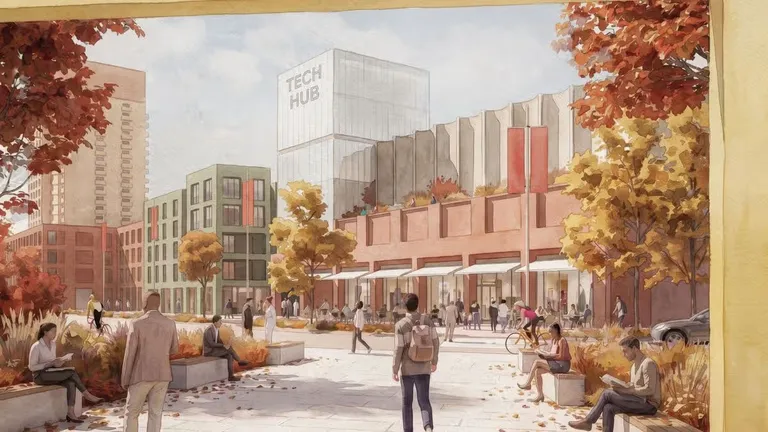
Plans to transform the area around Old Trafford into a world-class destination have been unveiled, with Trafford Council describing it as a "once-in-a-lifetime opportunity" that could ripple across Greater Manchester—including into Oldham. While the headline-grabbing element is Manchester United's proposed 100,000-seat stadium, the Wharfside Regeneration Masterplan goes far beyond football, aiming to create thousands of homes and jobs while overhauling transport links in the region.
Council leader Tom Ross has laid out a vision for Trafford Wharfside as a place to live, work, and visit, with a focus on making the benefits accessible to a wider area. “We want more people to be able to share in our borough’s success,” he said. “More people able to live in Trafford, work in Trafford and enjoy Trafford. So, what we are doing today is laying down the foundations for future success.” For readers in Oldham, this signals a broader effort to boost economic growth across the city-region, with potential knock-on effects for local job markets and transport networks.
The masterplan promises a network of attractive neighbourhoods built around the famous stadium, but Ross is keen to stress it's not an isolated project. “It isn't something that stands as an island separated from what's going on in the rest of the borough,” he added. “We want to make sure that we've got good access to healthcare and education provision. Most importantly for me, I want to make sure that the young people have opportunities that come from this regeneration, whether that be through jobs potentially in training or housing, affordable housing to move to when they get older.” This emphasis on youth opportunity and affordable housing reflects concerns shared by many communities, including those in Oldham.
No specific target has been set for how many of the new homes will be classed as affordable or social housing, but Ross said he wants to see “as much as possible” fall into these categories. While details are still being worked out—including how new residents will access services—discussions are already underway with local health and education providers. For Oldham, where similar pressures around housing and infrastructure exist, the approach taken in Trafford could offer a model to watch.
Transport is a key challenge for the development, which could eventually support up to 48,000 new jobs. The council aims to reduce car dependency, especially on matchdays, by improving public transport. One ambitious proposal is to reopen the former Manchester United railway station. “That will clearly serve people coming in to go and watch Manchester United play, but will also serve the new population that lives around that northern part of Trafford and indeed the Quays area as well,” Ross explained, adding that it would require collaboration with Transport for Greater Manchester. Better regional links could benefit commuters from Oldham too, making it easier to travel across the conurbation for work or leisure.
The scale of the project means a wide range of employment opportunities are anticipated, from design and construction to hospitality and transport management. Ross said the council is already working with Trafford College to shape future courses and ensure the local workforce has the right skills. “We'll work on a Greater Manchester level as well to make sure that we've got the right skills to support what is a massive regeneration project,” he noted. For Oldham residents, this could mean access to new training programmes or job openings if similar partnerships extend across the city-region.
Progress has not been without its hurdles—United had previously been in talks with Freightliner over land issues—but the masterplan is now public. As Trafford pushes ahead with its vision, the hope is that its benefits will spread beyond the immediate area, contributing to a stronger, more connected Greater Manchester. For now, the details are still emerging, but the ambition is clear: to build a world-class district that doesn't leave existing communities behind.