Politics · Oldham.news
Oldham Council deadlock: no mayor or leader after talks fail
Oldham Council stalemate after local elections leaves borough without a mayor or leader.
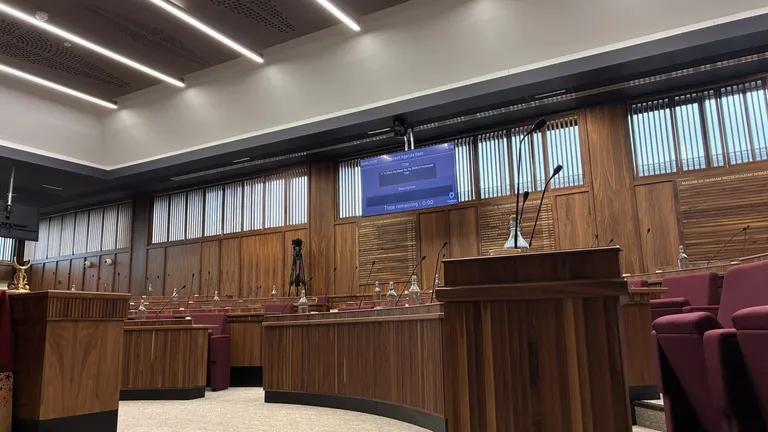
Oldham Council is in a state of political paralysis after a chaotic first meeting of the newly-elected authority ended without a Mayor, Leader, or Cabinet being appointed. The deadlock raises the very real prospect of government intervention unless the borough’s main parties can find a way to work together.
The unprecedented stalemate followed local elections which left a hung council. Labour emerged as the largest party with 18 seats, but Reform UK made significant gains to secure 16 seats, while The Oldham Group holds 10. The Conservatives have four seats, with the remainder held by Independents and the Liberal Democrats. No single party has enough seats to control the council outright.
Wednesday’s meeting at the Civic Centre was repeatedly suspended to allow for behind-the-scenes talks, but hours of negotiation failed to produce a breakthrough. The central issue was the election of the Mayor. A long-standing convention had set up Cllr Brian Hobin, the previous Deputy Mayor, to take the chain of office this year. Labour stood by this commitment, but opposition parties refused to back the nomination.
The resulting impasse meant no candidate—including Cllr Hobin, Conservative group leader Cllr Max Woodvine, or Reform UK’s Cllr Andrew Brooks—could secure enough votes. Outgoing Mayor Cllr Eddie Moores eventually abandoned the meeting at nearly 5pm, having started at midday.
Cllr Marc Hince, an Independent councillor, pleaded for an end to the political point-scoring. “The position shouldn’t be used as a political football to hammer about,” he said. “What this town needs right now is not a question of more division. It’s more a question of uniting. This churlishness about the Mayor cannot continue.”
Oldham West and Royton MP Jim McMahon placed the blame squarely on Reform UK and The Oldham Group. “Oldham deserves better than this,” he said in a strongly-worded statement. “The grandstanding which took place wasn’t necessary and it can’t be said it was in the public interest.” He accused the opposition of a “deeply disappointing break with convention” and “petty and personal politics” aimed at blocking the mayoral candidate before he could take office.
Reform UK group leader Cllr Lewis Quigg acknowledged the gravity of the gridlock, but argued his party was being frozen out by a “coalition of chaos”. He said: “The people of Oldham will look at this and think, ‘We’re a shambles.’ And they rightly should probably knock our heads together on this.” Reform UK stated that other groups refused to engage with them constructively despite repeated attempts to find common ground.
The Oldham Group, which holds the balance of power, defended their stance by insisting they would not engage in backroom deals. A spokesperson said: “We were clear, no back room deals, no secret agreements and no coalitions.” They claimed they listened carefully during the meeting but could not progress due to the “entrenched positions of some” groups.
The practical fallout is severe. Without a Mayor, the council cannot elect a Leader or form a Cabinet. This means major decisions on budgets, local services, and regeneration projects are effectively blocked. If the deadlock continues, the Government could be forced to send in commissioners to take over the running of the council, effectively stripping locally elected members of their decision-making powers.
All eyes now turn to a likely attempt at another full council meeting. The challenge for Oldham’s political leaders is stark: find a compromise for the good of the borough, or risk having that responsibility taken out of their hands entirely.